

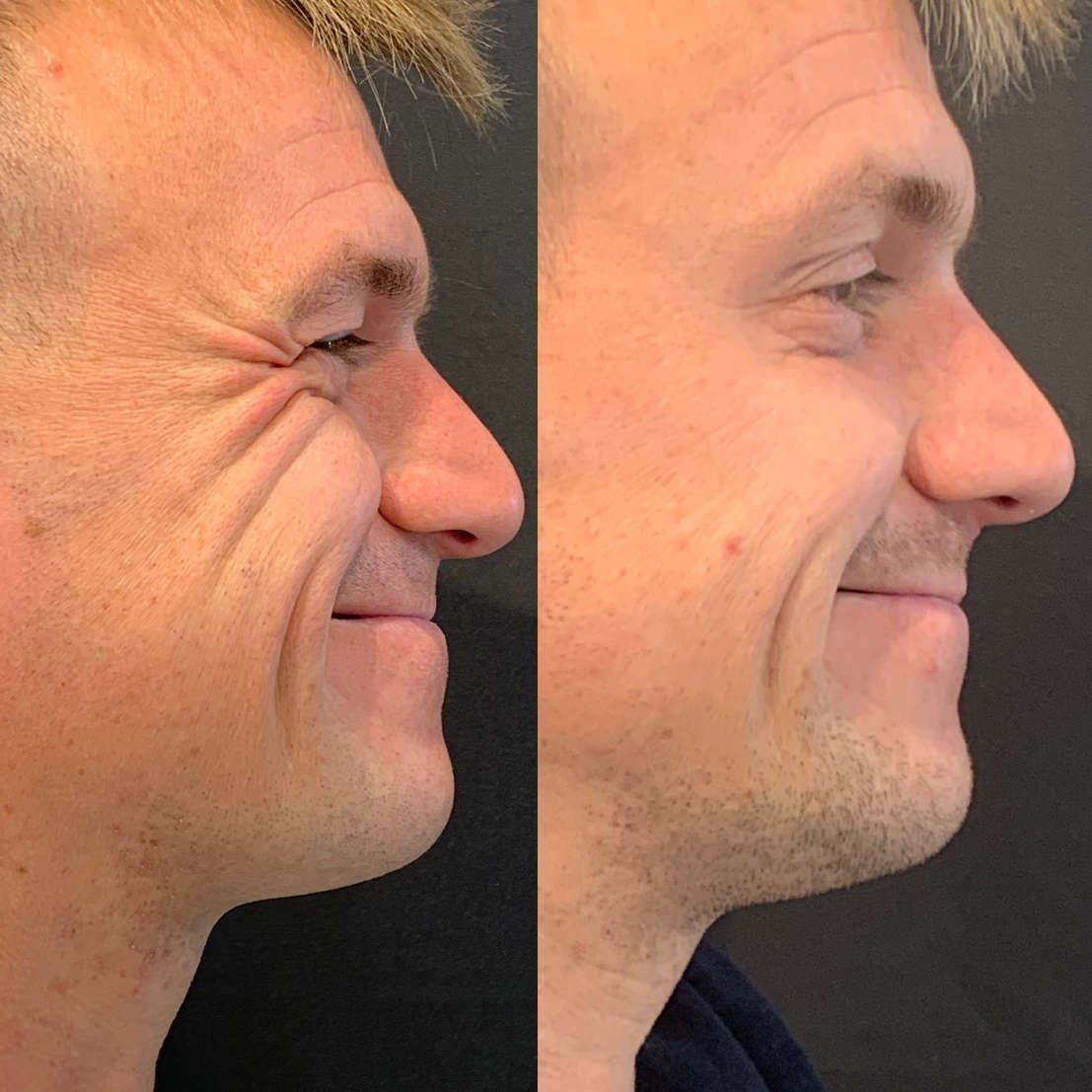
Anti-wrinkle injections are one of the most requested treatments in aesthetic medicine, yet many people book their first appointment with only a vague idea of what the process actually involves. Understanding the mechanism, the realistic timeline, and the questions worth asking a practitioner beforehand makes it far easier to get a result that looks like a rested version of your own face rather than an obviously “done” one.
How the treatment works
Anti-wrinkle injections use a purified form of botulinum toxin, delivered in tiny doses directly into specific facial muscles. Rather than filling or plumping the skin, the toxin temporarily interrupts the nerve signal that tells a muscle to contract. Weakening that contraction softens the lines that form above it — most commonly across the forehead, between the brows (the “11 lines”), and around the outer eyes (“crow’s feet”). Because the effect is muscular rather than structural, the surrounding skin, fat and bone are untouched, which is why the technique is described as minimally invasive.
Who tends to benefit most
The treatment is generally aimed at dynamic lines — the ones that appear when you frown, squint or raise your eyebrows and disappear when your face is at rest. Static lines that are visible even when the face is relaxed usually respond less predictably to toxin alone and may benefit from being addressed alongside skin-quality treatments. This is one reason a proper face-to-face consultation matters more than a quick online booking: an experienced practitioner should be assessing your muscle strength, facial asymmetry and skin condition, not simply the age on your form.
What the appointment itself involves
A typical session is short — most clinics quote somewhere between fifteen and thirty minutes for the injections themselves, after a consultation that maps out the muscles being treated and confirms the dose. A fine needle is used to place small amounts of the product at several points within the target muscle group. Discomfort is usually described as brief and mild, similar to a quick pinch, and no anaesthetic is normally required.
Visible results are not immediate. Most people notice the muscle beginning to relax from around three to five days after treatment, with the full effect settling in over roughly two weeks. That two-week mark is significant for another reason: it’s the point at which a practitioner can properly assess symmetry and, if needed, make small adjustments. Reputable clinics build a complimentary review into the treatment for exactly this reason, rather than treating the injection as a one-and-done event.
Recovery and aftercare
Downtime is minimal. Most people return to normal activities the same day, though clinics typically advise avoiding strenuous exercise, lying flat, or touching the treated area for several hours afterwards, since this can theoretically encourage the product to migrate away from the intended muscle. Mild redness or small bumps at the injection points usually settle within an hour or two.
- Avoid rubbing or massaging the treated area for the rest of the day.
- Stay upright and skip intense exercise for several hours.
- Hold off on facials, saunas or other treatments that involve heat or pressure for a day or two.
- Attend the follow-up review if one is offered — it’s the safest way to fine-tune results.
Results generally last around three to four months before the muscle activity gradually returns and the lines reappear. Because the effect is temporary and fully reversible, first-time patients are often encouraged to start conservatively; it’s far easier to add a touch more at the review appointment than to soften an overly strong result.
Questions worth asking before you book
In London, for example, doctor-led clinics such as Dr L’Art in Holborn build their anti-wrinkle service around a face-to-face consultation and a complimentary two-week review, which reflects the broader point above: the practitioner’s approach to assessment and follow-up matters as much as the product itself.
The bottom line
Anti-wrinkle injections remain popular because, done well, they produce a natural, subtle softening rather than a frozen look. The best outcomes come down to realistic expectations, a practitioner who takes assessment and follow-up seriously, and patience for the full two-week settling period before judging the result.
